

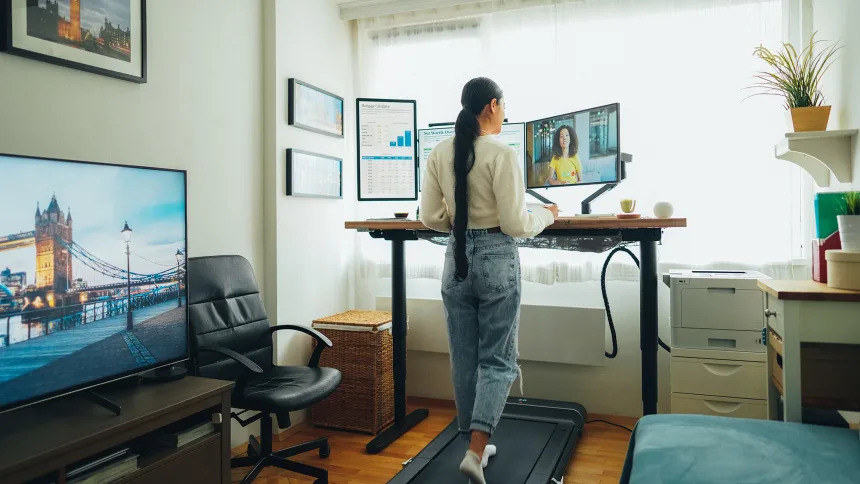
Increase your chances of living longer with 14 gym-free ways to sneak more movement in your day
You know the drill — exercise could help you feel better, prevent disease and live longer. But that knowledge may not always get you motivated enough to head to the gym. Whether you have “gymtimidation” or working out isn’t your thing — you can still start improving your health by making simple but powerful changes in how you move as you go about your usual routine.
Optimizing movement in your daily activities is a practice based on the concept of non-exercise activity thermogenesis, or NEAT, said Dana Santas, a certified strength and conditioning specialist known as the “Mobility Maker.”
“It includes all the movement we do throughout the day that isn’t part of a formal workout — things like walking to the kitchen, doing chores, standing instead of sitting, or even fidgeting,” Santas, a mind-body coach in professional sports, said via email. “These small actions can really add up and play a meaningful role in our daily energy expenditure and metabolic health.”
“But NEAT isn’t just about burning more calories — it’s also about how our bodies are built to move and function. From a mind-body perspective, all movement is significant,” said Santas, author of “Practical Solutions for Back Pain Relief.”
Americans spend around six to eight hours a day sitting, according to the US Centers for Disease Control and Prevention. Spending a lot of time sitting has been associated with a higher risk of premature death, heart disease, type 2 diabetes and obesity.
But you can counter being sedentary by becoming more aware of the ways you’re moving throughout your day and considering how to get more active in a way that works for you. “Frequent, varied movement through the day supports joint mobility, muscle health, bone density, circulation, mental focus, and even sleep,” she added.
The more vigorously you do some of these activities, the better, said Nicholas Rolnick, a physical therapist based in New York City. You can track that with an accelerometer (a wrist-worn motion sensor) since it measures your heart rate, or by using the equipment-free “talk test,” which helps you gauge intensity according to your breathing and capacity for conversation during exercise.